



Vatsala Nongmeikapam, Sarojini Nadimpally, Lila Shriram and
Susheela Singh
Behind every diagnosis of Sickle Cell Disease (SCD) is a story that rarely gets told: one of anxiety, stress, isolation, grief, pain and resilience. Through our work with women and young women living with SCD from the most marginalised communities, we have witnessed and documented how mental health remains the most neglected dimension of this disease — unacknowledged by families, invisible in policy, and unaddressed by the health system. This blog is an attempt to bring that experience to the centre.
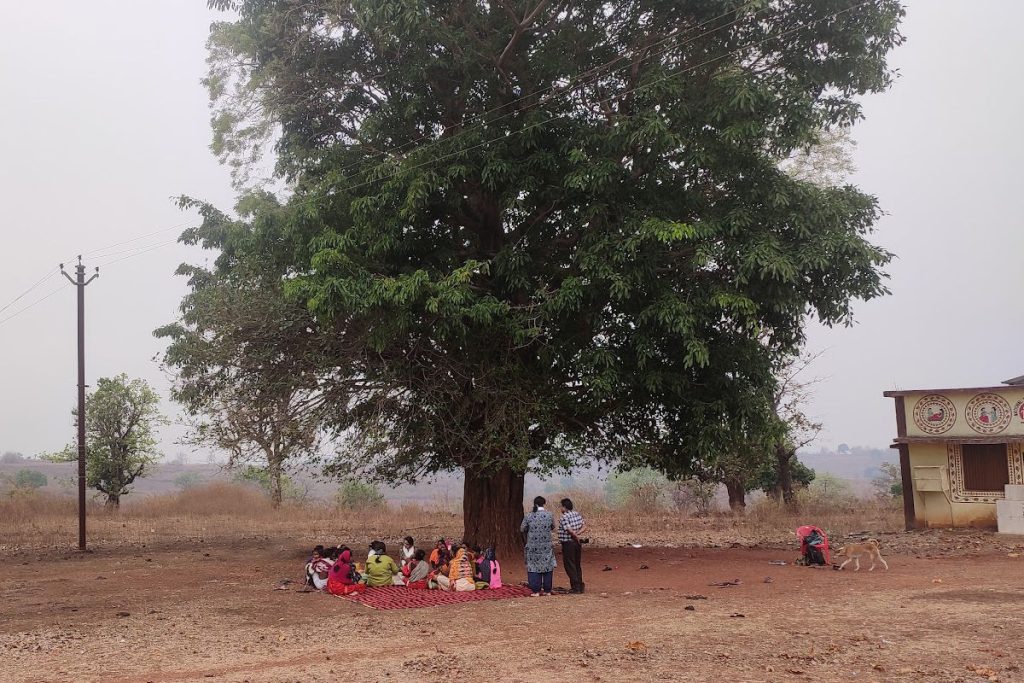
For over fifteen years, Sama – Resource Group for Women and Health has been deeply engaged with questions of mental health and psychological well-being through work with adolescent groups and young women, survivors of gender-based violence, women and youth in conflict-affected areas, and those navigating the psychological burdens of communicable diseases, infertility, and surrogacy. In recent years, this engagement has extended to people living with blood disorders such as sickle cell disease (SCD).
At the heart of this work lies a core recognition: mental health is not an isolated or purely individual concern but one profoundly shaped by social, political, and economic realities. A solely biomedical lens carries inherent limitations in identifying and addressing the structural conditions that shape mental well-being. This is no different for those living with SCD navigating pain crises, poverty, gendered expectations, stigma, caste-based discrimination, and the absence of empathy within systems and institutions.
Living with SCD: Pain, Stigma, and Psychosocial Distress
SCD is characterised by unpredictable and intense episodes of pain lasting hours or days that often require emergency care. Over time, these crises lead to chronic fatigue and organ damage, disrupting education, livelihoods, and family life. The psychological toll is considerable, manifesting as anxiety, feelings of helplessness, and a profound sense of being unable to cope.
“I shake with anxiety and discomfort as if I am lost in a crowd. My body feels worn out, as if I just finished a lengthy run. It is so stressful! I cannot understand what is happening to me.”
— Seema (name changed), 32, woman with SCD, Chhattisgarh
Healthcare providers commonly disregard or dismiss the pain that women with SCD have to endure; so do their families and communities. Such responses are rooted in gendered and caste-based biases that perceive women exaggerate their suffering and are, therefore, unreliable. It is a form of medical gaslighting that women are increasingly complaining about during discussions about their experience with health systems, especially in obstetric care and endometriosis. Several women with SCD have shared that they are accused of being lazy or pretending to be ill when in reality they are unable to perform even the basic household tasks because of the pain. They are forced to endure pain silently, deepening their psychological distress.
“Even when I am in excruciating pain, my family says I am pretending. I simply cannot perform any task because the pain is so severe. I can’t stop myself from crying, but my in-laws never fail to remind me that doing household chores is my duty. I worry all the time and go through terrible mental stress. I have lost my appetite, but no one bothers. I think women face this humiliation more, while men get a lot of sympathy for the same condition.”
— Sushma (name changed), 24, woman with SCD, Chhattisgarh
Stigma is a further source of psychosocial distress. Sama has observed that the gendered impact of this stigma has led to women being blamed for the disease, sometimes abandoned by partners or families, and labelled as “unfit” for marriage or motherhood. Such stigmatisation, rooted in caste-patriarchy, results in social exclusion, negative attitudes, and diminished self-worth.
The patriarchal expectation that women must produce “healthy” children despite having no control over genetic inheritance mirrors broader patterns seen in infertility and sex determination, where women are unjustly held responsible. A common misconception persists that only mothers transmit the disease, while men frequently refuse screening, further reinforcing gendered inequities.
“I was always taunted and threatened that my husband would leave me. I was always reminded that, like my parents, I come from a ‘sickling’ family. My husband never went for a test. Each day I lived under fear and anxiety that he might leave me. Where will I go if he really leaves me?”
— Santoshi (name changed), 25
These experiences are compounded by frequent hospitalisations and high out-of-pocket expenses, particularly in areas where health facilities are distant, medicines scarce, and specialised care limited. Young people are especially affected, missing school, losing livelihood opportunities, and facing deep uncertainty about their future. It is reported that depression is the most common mental health condition associated with SCD, affecting an estimated 36% of patients.
Key Challenges and Unaddressed Areas in the National SCD Mission
In 2023, the Government of India launched the National Sickle Cell Anaemia Elimination Mission with the goal of eliminating SCD through community awareness, mass screening, diagnostic networks, and strengthened healthcare systems. These are significant commitments. What is conspicuously absent, however, is any meaningful understanding of the psychosocial and mental health dimensions of SCD in the mission’s design, guidelines, or goals.
The Operational Guidelines: Scope for a Broader Approach
The Operational Guidelines treat SCD largely as a standalone physiological condition, abstracted from the broader social determinants of health. While there is a surface-level acknowledgement of socio-economic implications, these are framed in terms of productivity loss and expenditure, not from the perspective of the patient. The lived realities of those affected, particularly those from marginalised communities, are absent.
Mental health appears only briefly in the Guidelines (pg. 50), where cognitive behavioural therapy and psychotherapy are mentioned as disease management interventions, a passing reference that does not reflect the depth or complexity of psychosocial needs. There is no attention to stigma, myths associated with the disease, or the multisectoral measures needed to strengthen access to healthcare, transportation, education, employment, and other essential rights and entitlements for people living with SCD.
Need for Structured Referral Support After Screening
Our field observations show that when screening efforts are rushed and do not include comprehensive information, counselling, and referral mechanisms, they cause confusion, anxiety, and aggravate isolation and stigma. Some SCD screenings require two levels of testing: a preliminary solubility test followed by a confirmatory test. We found in many cases, the results were left unconfirmed because only the first test had been carried out. Both for those who test positive for the trait as well as those living with the disease, these gaps lead to misdiagnosis, misinformation, and uncertainty in follow-up care.
Counselling: Beyond Biomedical to Lived Realities
The concept of counselling within the existing guidelines requires urgent scrutiny. It is framed almost exclusively around premarital and preconception genetic “matching” — a practice that raises serious ethical concerns and reinforces the notion of SCD being a social liability rather than a condition that can be managed with dignity and support. After prenatal diagnosis, counsellors are instructed to advise on “pregnancy continuation” — language that is directive rather than neutral, echoing eugenic ideas about eliminating births with SCD and undermining reproductive autonomy.
The Counselling Module available on the Mission website is largely biomedical in nature, focused on medical do’s and don’ts, community screening, and pregnancy-related guidance. It fails to account for the real-world contexts in which gender, poverty, caste, and disability pose major challenges in accessing information and care while continuing to deteriorate mental health.
Awareness Without Affirmation
Awareness programmes follow a clinical script centred on inheritance patterns, symptoms, and risk reduction. Rarely do they address the stigma that patients face or offer affirmative narratives that foster inclusion. In some cases, biomedical technical messaging has inadvertently reinforced social labelling, further alienating patients from schools, workplaces, and communities, and reinforcing gendered forms of discrimination and violence.
The Absent Voices of Those Most Affected
Non-governmental organisations are largely seen as implementers responsible for community mobilisation for screening and the delivery of genetic counselling, rather than being equal partners in evolving rights-based, patient-centred interventions. As a result, the voices and insights of people living with SCD and the value of lived experience risk being underrepresented in programme design. There is also limited attention given to multisectoral coordination—for instance, measures to ensure that schools and community spaces provide mental health support and facilitate access to entitlements guaranteed under the Rights of Persons with Disability Act, 2016.
Conclusion
What emerges from these accounts is that mental health cannot remain peripheral to SCD care. Anxiety, depression, fear of pain crises, social isolation, uncertainty around marriage and reproduction, and the exhaustion of navigating repeated hospitalisations are woven into the everyday realities of living with SCD. Yet psychosocial support is still treated as secondary to biomedical management. Integrating mental health care into routine SCD services, including at the primary healthcare and district levels, is essential if care is to respond to the full burden of the disease rather than its clinical symptoms alone.
What is needed is not simply the addition of mental health language into policy documents, but a shift in how care itself is imagined. Psychosocial support must become part of routine SCD care rather than an optional add-on. This includes training healthcare providers to recognise the emotional and social dimensions of chronic illness and to take patients’ pain seriously. It also means building systems where patients and families are not left to navigate the disease in isolation.
Importantly, counselling must move beyond a narrow genetic-risk framework. In many public health programmes globally, genetic counselling has historically carried traces of eugenic thinking, where the emphasis subtly shifts toward preventing the birth of affected children rather than supporting people already living with the condition. In India, where caste, gender, disability, and social stigma already shape reproductive decision-making, this risk cannot be ignored. Counselling should therefore be grounded in informed choice, dignity, and autonomy, rather than fear or social pressure.
Equally important is understanding how stigma influences healthcare interactions and social life. Many women reported they were not believed, their pain downplayed, or they were treated as weak, untrustworthy, or bothersome. Women and adolescents’ experiences were often intensified by gendered expectations and social discrimination. Training healthcare providers to identify these biases and respond with empathy and seriousness is therefore critical. Counselling and screening techniques must also shift away from fear-based or directive approaches and toward informed, rights-based decision-making that respects dignity and autonomy.
At the same time, mental health cannot be separated from the broader social and economic conditions in which people live. Housing insecurity, poverty, disrupted education, precarious employment, and lack of social protection all have a significant impact on well-being and access to healthcare. Public awareness efforts must therefore go beyond biomedical messaging to challenge stigma and create more enabling environments in schools, workplaces, and communities. Community organisations and patient groups have already played an important role in building solidarity, support networks, and awareness, yet they are often treated merely as implementers rather than equal partners in shaping policy. A more responsive SCD framework would recognise the importance of community participation and build stronger coordination across health, education, disability, and social welfare systems so that support extends beyond the hospital into everyday life.
The authors thank and acknowledge Ranjan De for his inputs and guidance on the post.